The Convenience Paradox: Why Retail's Future Is Built on Inventory, Not Price
The Convenience Paradox: Why Retail's Future Is Built on Inventory, Not Price
TL;DR: Chinese retail data from 2026 reveals a consumer who isn't cheap — she's calculating. Service retail is growing 4x faster than goods. Convenience stores are booming while department stores collapse. And the real winners aren't discounting harder; they're re-engineering cost structures from the ground up. The future of retail isn't who sells cheapest. It's who removes the most friction between "I need this" and "I have this."
James here, CEO of Mercury Technology Solutions. Hong Kong — July 16, 2026
A consumer research firm called QinCe just published their 2026 China Retail Industry Report. Here's the opening observation:
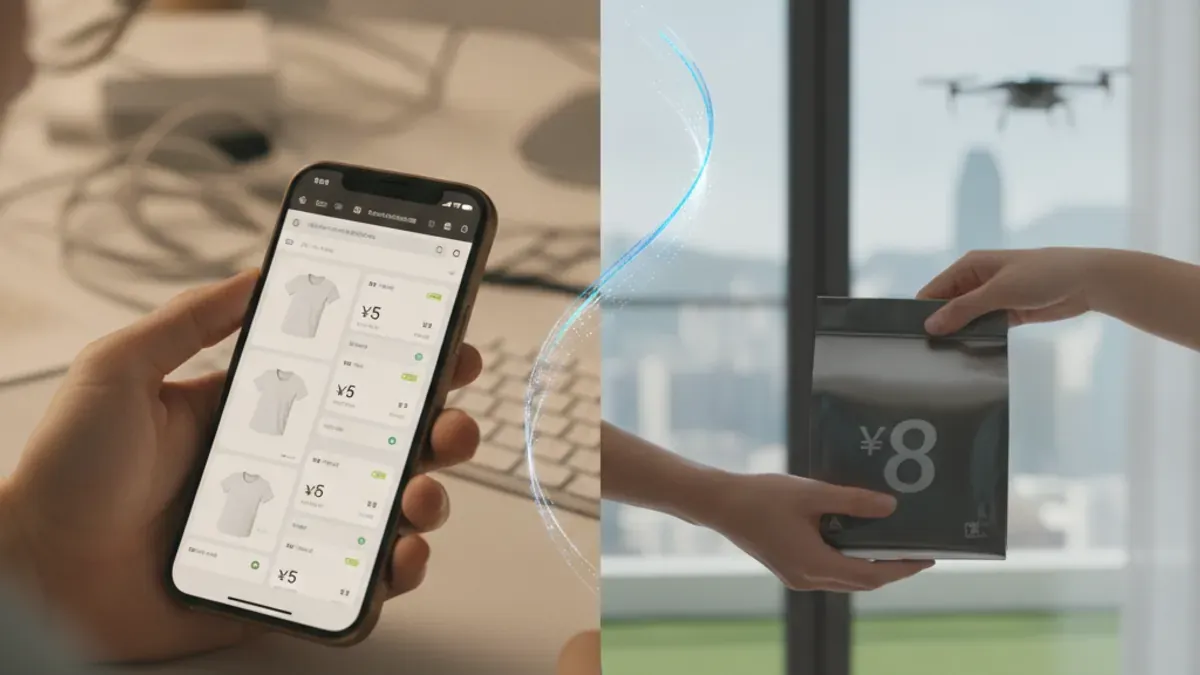
The same person who spends three days comparing prices across platforms to save ¥5 on a shirt will pay ¥8 extra for 30-minute milk delivery at 10 PM.
This isn't irrational. This is a consumer who has learned to compute total cost — not just price, but time, effort, mental load, and urgency. The shirt can wait. The milk cannot.
And that distinction is reshaping retail faster than most businesses realize.
The Jobs-to-be-Done Reframe
QinCe's data: January–May 2026, goods retail grew 1.2% year-over-year. Service retail grew 5.4%. Service is outpacing goods by more than 4x.
This doesn't mean people prefer experiences over stuff. It means they're buying something different than what retailers think they're selling.
Jobs-to-be-Done theory (Clayton Christensen's "milkshake" insight) applies here: consumers don't buy products. They hire solutions to complete tasks.
Consider fruit. A parent preparing for a child's school trip needs fruit that arrives fast, won't bruise in a backpack, is easy to share, and doesn't create sticky hands. An office manager ordering afternoon tea needs fruit that's washed, cut, arranged, and presentable.
Same SKU. Completely different job. Completely different value proposition.
The product is the wrapper. The completed task is the product.
Retailers who understand this stop optimizing for "how do I sell more fruit?" and start asking "what happens after my customer buys the fruit?"
Washing, cutting, arranging, delivering, installing, configuring — every step the customer must complete after purchase is a service opportunity. And increasingly, consumers will pay to not complete those steps themselves.
The Geography of Convenience
"Offline is dying" is the wrong narrative. QinCe's numbers tell a more precise story:
| Format | Jan–May 2026 Growth | |--------|---------------------| | Convenience stores | +6.8% | | Supermarkets | +3.6% | | Department stores | -1.8% | | Brand specialty stores | -7.6% |
Consumers aren't abandoning physical retail. They're re-sorting it by distance and urgency.
Think of it as two retail modes:
Research mode: I know what I want. I've compared prices. My goal is minimum total cost — including time, parking, and hassle. This is where online wins. The consumer who drives to a mall to browse electronics, then orders online for cheaper, isn't irrational. The mall trip was the research phase. The online order was the purchase phase. The physical store became a showroom, not a point of sale.
Rescue mode: I need this now. Milk at 10 PM. Salt mid-cooking. A 2B pencil the morning of an exam. Here, proximity beats price. The convenience store 200 meters away wins over the cheaper supermarket 3 kilometers away because the cost of delay exceeds the cost of premium.
Online isn't killing offline. It's amplifying offline's distance advantage for high-frequency, low-planning purchases.
The convenience store isn't competing with Amazon. It's competing with "I don't have time for this."
The Two Kinds of Cheap
QinCe's most interesting data is on hard discount chains. Hema's discount brand runs 60% private label. Aldi China runs 90%. And Aldi operates with ~2,000 SKUs versus 20,000–40,000 at a traditional supermarket.
This isn't assortment reduction for its own sake. It's cost-structure engineering.
Most retailers think cheap means: cost ¥8, sell for ¥10, now discount to ¥9. Margin compression. Race to the bottom. Everyone loses.
The hard discount model is different: re-engineer the ¥8 cost down to ¥6, then sell at ¥8. The consumer gets lower prices. The retailer maintains margin. The supplier gets volume commitment.
How?
• SKU consolidation: 20 similar laundry detergents become 2. Each gets 10x volume. Negotiating leverage increases.
• Private label control: Packaging, ingredients, specifications — all optimized for cost, not marketing.
• Supply chain compression: Fewer intermediaries, faster turnover, lower inventory holding costs.
• Operational simplification: Less warehouse complexity, less shelf management, less shrinkage.
This is structural cheap, not promotional cheap. Promotional cheap is a pricing decision. Structural cheap is a system design decision.
One is a race to the bottom. The other is a moat.
The Three Questions Every Retailer Must Answer
QinCe's framework distills to three questions. I think they're universal:
1. What job is my customer hiring me to complete?
Not "what product do they want?" — what outcome are they trying to achieve? And what steps remain after they leave my store or close my app?
2. What is the total cost of acquiring my product?
Price + time + travel + mental load + delay risk. If the total cost is high, someone will arbitrage it. Usually Amazon. Or a convenience store. Or a service layer you didn't build.
3. Is my cheapness structural or promotional?
If you're cutting margin to match competitors, you're in a war of attrition. If you're re-engineering cost structure, you're building a defensible position.
The Pattern: Retail as Friction Removal
The through-line in all three insights: good retail removes work the customer shouldn't have to do.
• Pre-cut fruit removes washing and cutting.
• 30-minute delivery removes planning and travel.
• Curated assortments remove decision fatigue.
• Structural cheapness removes the "am I overpaying?" anxiety.
Consumers aren't spending less. They're spending more precisely. Every yuan is allocated to minimize total cost — and "cost" includes time, effort, and mental load, not just price.
Stop optimizing for price. Start optimizing for friction removal.
The retailers winning in 2026 aren't the ones with the lowest prices. They're the ones who make the customer feel like the least amount of work happened between "I need this" and "I have this."
Mercury Technology Solutions: Accelerate Digitality.
Originally published on MTS Blog & Research