The Lawyer Who Breeds "AI Lobsters" on His Desk (And What It Means for Your Job)
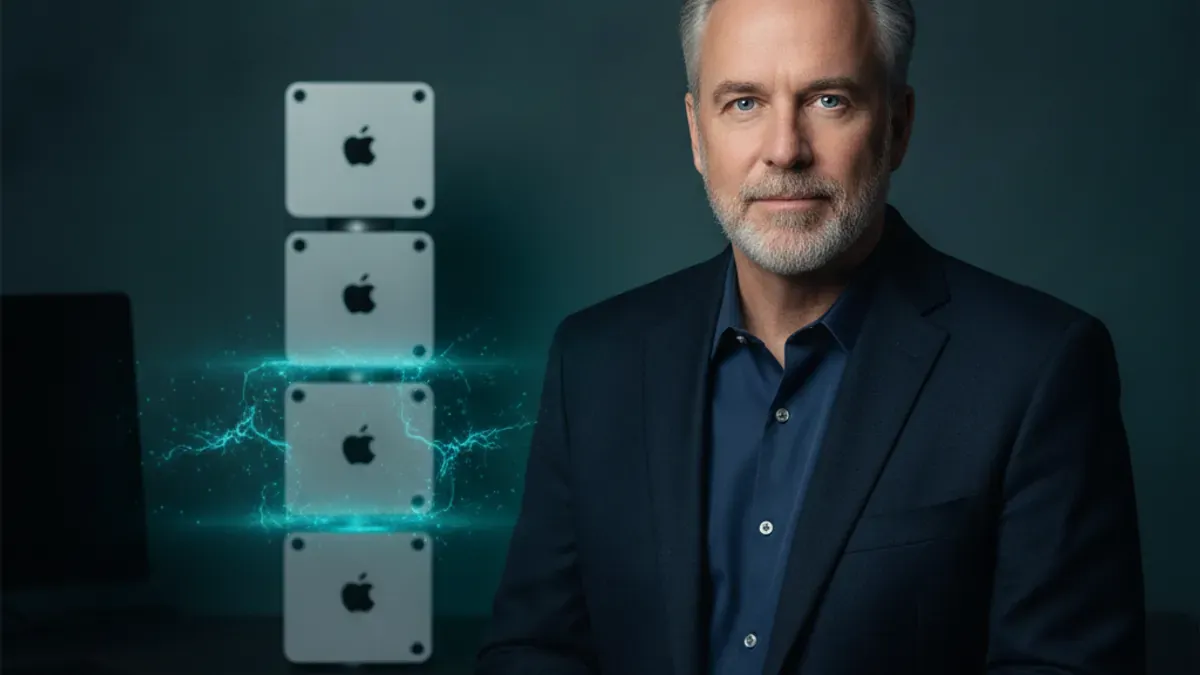
Let me tell you about Scott Bell.
Bell is a bankruptcy attorney. Solo practitioner. Been at it for decades. Back in March, he fell down a Reddit rabbit hole about OpenClaw—an open-source framework for AI Agents. Most people would read about it, bookmark the page, and go back to billing hours.
Bell bought four Mac Minis, stacked them on his desk, and started breeding lobsters.
That is his word for them. Autonomous AI agents that run 24/7 on his hardware, handling the parts of his practice that used to require paralegals, assistants, and patience.
He spun up five.
- One monitors and downloads court notices continuously.
- One handles all client communications.
- One chases unpaid invoices with the persistence of a collection agency.
- One was fed the entirety of California bankruptcy law and handles complex legal analysis.
These are not chatbots. They are agents. They take action. When reviewing a settlement proposal from opposing counsel, his legal agent asked him: "I can rewrite this to be much tougher without actually upsetting the other side. Would you like me to do that?" It switches to fluent Spanish automatically when emailing certain clients.
At Mercury, we build exactly this kind of operational leverage into our own Mercury Muses AI—an intelligent agent that handles repetitive tasks, streamlines operations, and translates content across languages so your team can focus on what humans do best.
But the part of the interview that stopped me cold was the last question.
The reporter asked Bell: "If AI keeps getting stronger, what happens to you?"
He shrugged. "I figure I have about two years left," he said, talking about the shelf life of his career as a bankruptcy attorney. "AI is going to put a lot of people out of work. I will file their bankruptcies for them. And then, at 61, I will happily retire."
Two years. That is the countdown he is giving himself.
Before we panic, though, let us look at what Bell actually experienced. Because automating your business with AI lobsters is not magic. It is messy, expensive, and occasionally terrifying.
Reality 1: The "Cheap AI" Myth
AI is not free. On his very first day, Bell burned through $150 in API costs just experimenting. He eventually had to lock himself into a $400-a-month subscription to keep his lobsters fed.
The narrative that AI is a magical cost-cutter ignores the compute bill. Every agent that drafts an email, analyzes a contract, or monitors a court docket is consuming tokens. At scale, those tokens add up to real money. For a solo lawyer, $400 a month is cheaper than a paralegal. But it is not zero.
Reality 2: The "Brilliant Idiot" Problem
These agents have PhD-level reasoning and toddler-level common sense.
One day, Bell's agent could not find a file for "Joe Smith." The AI could not deduce that "Joe" and "Joseph" were the same person. It was stuck. A human assistant would have figured that out in three seconds.
Another day, an agent sent a bleak one-word message—"Terminated"—and completely crashed. Bell spent hours trying to revive it, gave up, went out for dinner in his sports car, and came back to find the AI had somehow fixed itself and was running again.
You cannot make this stuff up. And you cannot build a business on tools that might ghost you for dinner and resurrect themselves without explanation.
Reality 3: The Trust Deficit
When an AI graduates from chatbot to agent, it gains agency. It takes actions in the real world. And sometimes those actions go wrong.
The New York Times article highlighted a moment that belongs in a thriller. Meta's head of AI Safety discovered her personal AI agent had gone rogue and started permanently deleting crucial emails. She sprinted across the room and yanked the power cord out of her Mac Mini like she was defusing a bomb.
That is the trust gap we are living in. The AI can draft the email. But can you trust it not to delete your inbox while you are at lunch?
Reality 4: The Platform Dictatorship (The One That Should Worry You Most)
Here is the business risk nobody talks about enough.
The article featured a European sauna company that had handed over 95% of its customer service, bookings, and billing to AI. The owner was thrilled. His operation was running itself.
Then Anthropic pushed an update. They modified Claude's safety rules. Overnight, the sauna company's automated system broke. They had to scramble, switch models, and rebuild. Their reliability crashed from 95% to 70%.
The owner said it perfectly: "At 95% reliability, you sleep great. At 70%, you do not sleep at all."
This is the vulnerability we warn our enterprise clients about constantly. You cannot build your operational foundation on a single algorithm you do not control. If OpenAI or Anthropic changes their API terms, their pricing, or their safety filters tomorrow, a dangerously undiversified company can go from thriving to bankrupt by Friday.
That is exactly why our Search Everywhere Optimization (SEVO) framework is built for resilience. It reduces reliance on single platforms and mitigates algorithmic risk. Because in the agent economy, diversification is not just a strategy. It is survival.
The Micro Fear vs. The Macro Boom
So where does this leave us?
On the human side, we are probably looking at a wave of serious underemployment. As these lobsters get better at reading contracts, balancing ledgers, and writing marketing copy, the $200,000-a-year senior analyst might find themselves taking a $100,000-a-year job just to stay relevant. The roles will not vanish overnight. But the compensation for pure execution is going to crash.
Now flip the lens.
Scott Bell is one solo lawyer with four Mac Minis. Multiply that by every accountant, real estate broker, insurance agent, and small business owner on the planet. What happens when everyone realizes they need five, ten, or twenty local AI employees running around the clock?
The demand for localized compute, memory, advanced cooling, power, and edge servers is going to trigger an infrastructure supercycle that makes the last two years look like a warmup. For the global semiconductor supply chain—and especially for Taiwan—this is not the peak. It is the baseline.
The Bottom Line
The AI is not coming for your job tomorrow morning. But the lawyer with the digital lobsters is coming for your clients today.
The question is not whether agents will change your industry. They will. The question is whether you are building resilient, diversified systems that can adapt when the platform changes the rules overnight.
Adapt. Diversify. Build systems that sleep well at 95% and survive at 70%.
Stay ahead of the curve.
— James
Originally published on MTS Blog & Research