The Mirror Effect: Why Society Kills Its Best Thinkers
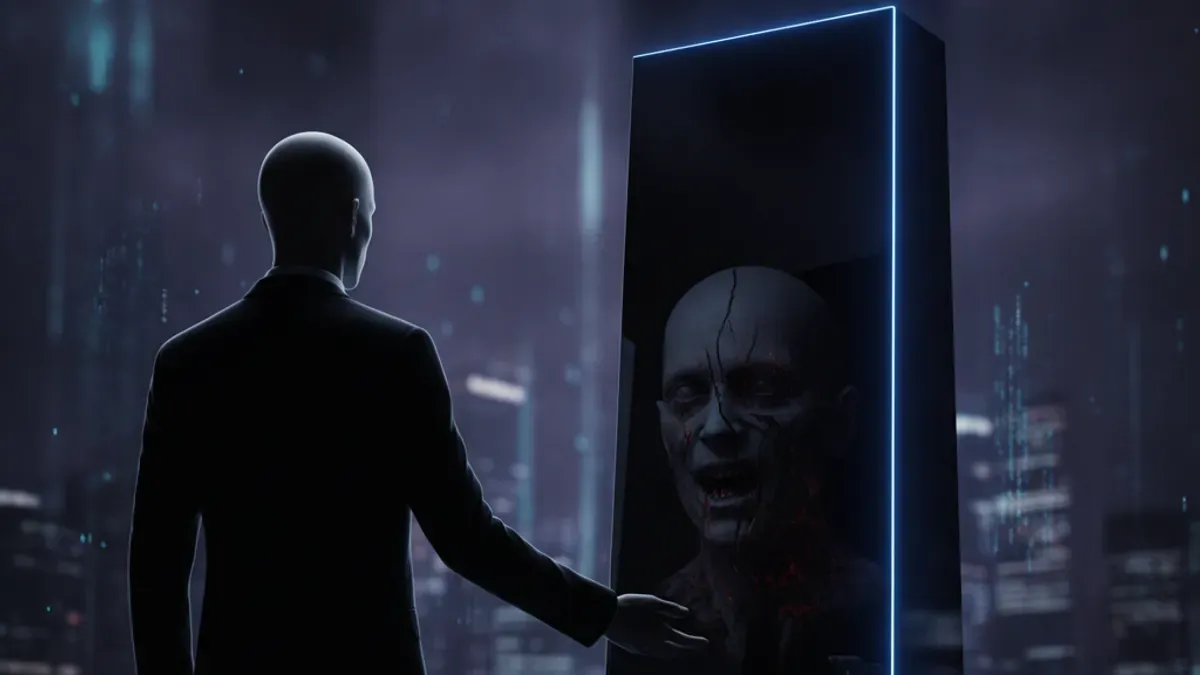
The Mirror Effect: Why Society Kills Its Best Thinkers
TL;DR: Deep thinkers aren't lonely by choice — they're isolated because their very existence forces others to confront their own mediocrity. Socrates died not because he was wrong, but because he held up a mirror Athens didn't want to look into. This pattern repeats across every civilization, including ours. The question isn't why thinkers are lonely. It's why we keep killing them.
James here, CEO of Mercury Technology Solutions. Hong Kong — July 2026
I just finished re-reading Schopenhauer on the death of Socrates, and something clicked that I've been circling for years.
We talk about Socrates like he was a martyr for truth. The noble philosopher, poisoned by a jealous democracy. It's a clean story. It's also wrong.
Socrates wasn't killed for being right. He was killed for being a mirror.
The Athens Paradox
Here's what nobody explains about Socrates: Athens wasn't some backwater. These were the smartest people in the ancient world. They invented democracy. They invented the scientific method. They built the Parthenon.
And yet they killed the smartest man in their city with a vote.
The standard explanation is "tyranny of the majority." The mob rules. Democracy fails. Fine — but that just pushes the question back one layer. Why was the mob so stupid in the first place?
Today the pattern is identical. Scroll through your feed. The shallow content gets millions of views. The deep analysis gets ignored. Someone posts a nuanced take on a complex issue — crickets. Someone posts a hot take that confirms what everyone already thinks — viral.
Schopenhauer saw this clearly. He didn't blame democracy. He blamed human nature.
The Schopenhauer Divide
Schopenhauer — the 19th-century German philosopher who spent his life alone and angry — proposed something brutal: In this world, we have only two choices: solitude or vulgarity.
Most people choose vulgarity. Not because they're evil. Because thinking is hard, and not thinking is easy. The crowd isn't a conspiracy. It's a gravity well. Mediocrity pulls everything toward the center.
But here's the part everyone misses: The deep thinker isn't lonely by choice.
This is crucial. We romanticize the lonely genius. The tortured philosopher walking alone. Schopenhauer says: bullshit. They don't want to be alone. They're alone because nobody can follow them.
Think of it as signal-to-noise. The thinker is broadcasting on a frequency the crowd can't receive. Not won't — can't. The cognitive bandwidth isn't there. So the thinker ends up standing in a room full of people, speaking a language nobody understands.
That's not a choice. That's physics.
The Mirror Effect
Now here's where it gets interesting — and where Schopenhauer becomes genuinely useful.
Why does the crowd not just ignore the thinker, but actively destroy them?
Socrates could have lived. Diogenes lived in a barrel and said worse things. Epicurus ran his garden and nobody bothered him. Socrates chose to walk into the agora and show people what they looked like.
That's the difference. Diogenes mocked Athens. Socrates diagnosed it.
Schopenhauer explains this through what I'll call the Mirror Effect — though he never named it. When you stand next to an Olympic champion, you feel small, but you also feel admiration. The gap is objective. You can see it. You can measure it. You might even think: "I could train for that."
When you stand next to a billionaire, same thing. The wealth is quantifiable. You might resent them, but you don't deny the money exists. The gap is real.
But when you stand next to someone who thinks more clearly than you, something different happens.
The gap is invisible. Intelligence isn't objective in the same way strength or wealth is. You can deny it. You can tell yourself: "He just talks fancy." "She's overcomplicating it." "That's just his opinion."
And because you can deny it, you must deny it.
Because if you don't deny it, you're forced to confront something far worse than being poor or weak. You're forced to confront being shallow.
The Psychology of Self-Protection
Psychologists call this the mirror effect — we form our self-concept by comparing ourselves to others. Others are mirrors. We see ourselves reflected in their competence, their success, their clarity.
Most of the time, this works fine. Someone richer than you? That's motivation. Someone stronger? That's a benchmark.
But someone wiser? That's an existential threat.
Because wisdom isn't something you can buy. It isn't something you can train for in six months. It's the product of years of uncomfortable thinking, of questioning assumptions, of sitting with confusion until clarity emerges. And most people have spent their entire lives avoiding exactly that.
So when the wise person appears — not even saying anything, just existing — they become a mirror that shows the crowd their own intellectual nakedness.
And the crowd's response? Break the mirror.
Socrates didn't die because he corrupted the youth. He died because he made the youth think. And thinking youth grow up to question the adults who never learned how.
The Pattern Repeats
This isn't ancient history. This is Tuesday.
Galileo didn't just discover heliocentrism. He made everyone who believed in geocentrism feel stupid. The Church didn't care about astronomy. They cared about authority. Galileo was a mirror showing the faithful that their priests were wrong about the cosmos. Break the mirror.
Every prophet in the Old Testament was a lonely man. Not because God chose lonely men. Because only lonely men could survive being mirrors. The crowd doesn't want prophets. They want confirmation.
I see this in business constantly. The person who asks the uncomfortable question in the meeting gets sidelined. The person who points out the strategic flaw gets labeled "not a team player." The person who actually reads the data gets told they're "overthinking it."
The team doesn't want better thinking. They want the comfort of shared mediocrity.
The Modern Information Cocoon
Here's what Schopenhauer couldn't have predicted: we've industrialized the breaking of mirrors.
Social media doesn't just allow people to avoid deep thinkers. It actively filters them out. The algorithm shows you what you already believe. The timeline rewards what you already feel. The engagement metric optimizes for emotional reaction, not intellectual growth.
The information cocoon isn't a bug. It's a feature of human psychology, weaponized by technology.
When someone posts something that challenges your worldview, your brain doesn't engage. It defends. It attacks. It dismisses. Not because the challenge is wrong — because the challenge is uncomfortable.
I've had readers email me after a post saying they "disagree with my tone" or "don't like how I framed that topic." Not the facts. Not the logic. The framing. Because the framing made them look at something they didn't want to see.
Schopenhauer would have recognized this instantly. The mirror is being held up. The response is to break the mirror, or to break the person holding it.
What This Means for You
I'm not going to tell you to be Socrates. Most people aren't Socrates, and even Socrates got killed.
But I am going to give you three things to think about:
First: Choose your depth deliberately.
If you decide to think deeply, you will be lonely. Not because you're better than anyone. Because the frequency you're broadcasting on has fewer receivers. Schopenhauer was right: the more you think, the fewer people will understand you.
But here's the thing — you don't need everyone to understand you. You need a few people on your frequency. Find them. Keep them. The rest is noise.
Schopenhauer had a line: The more mediocre a person is, the more they need company. Notice the people who can't be alone. Notice what they're avoiding.
Second: Silence is a strategy.
Socrates had a choice. He could have stayed in his garden, like Epicurus. He could have lived. He chose to walk into the agora because he loved Athens more than he loved his own life.
Most of us don't love anything that much. And that's fine. You don't owe the world your unfiltered thoughts. Sometimes the smartest move is to hold the mirror up to yourself, and let the crowd keep their comfortable illusions.
This isn't cowardice. This is survival arithmetic. $T_{\text{Influence}} < T_{\text{Annihilation}}$ — if your influence timeline is shorter than the timeline in which they'll destroy you, adjust your strategy.
Third: Don't trust the crowd's applause.
If everyone agrees with you, you're either stating the obvious or confirming their biases. Neither is useful. The ideas that get the most likes are usually the most mediocre. They're designed to be liked, not to be true.
The stock market loses retail investors money because they follow the crowd. The crowd is wrong because the crowd is optimized for comfort, not accuracy. The popular opinion is the average opinion. The average opinion is, by definition, average.
The Final Mirror
I'll close with this.
Schopenhauer spent his life alone, bitter, and largely ignored. He died in 1860, and his work was mostly forgotten for decades. Today, he's recognized as one of the most influential philosophers in history.
The crowd broke his mirror while he was alive. They couldn't break the reflection itself.
Socrates died in 399 BC. We're still talking about him. The Athenians who voted to kill him? We don't know their names.
The mirror always wins. It just takes longer than a human lifetime.
The question for you is: Are you holding the mirror? Or are you in the crowd, breaking it?
Because here's the uncomfortable truth Schopenhauer forces us to confront: You can't be neutral. You're either reflecting depth, or you're breaking the mirrors that do.
There's no third option.
Mercury Technology Solutions: Accelerate Digitality.
Originally published on MTS Blog & Research